
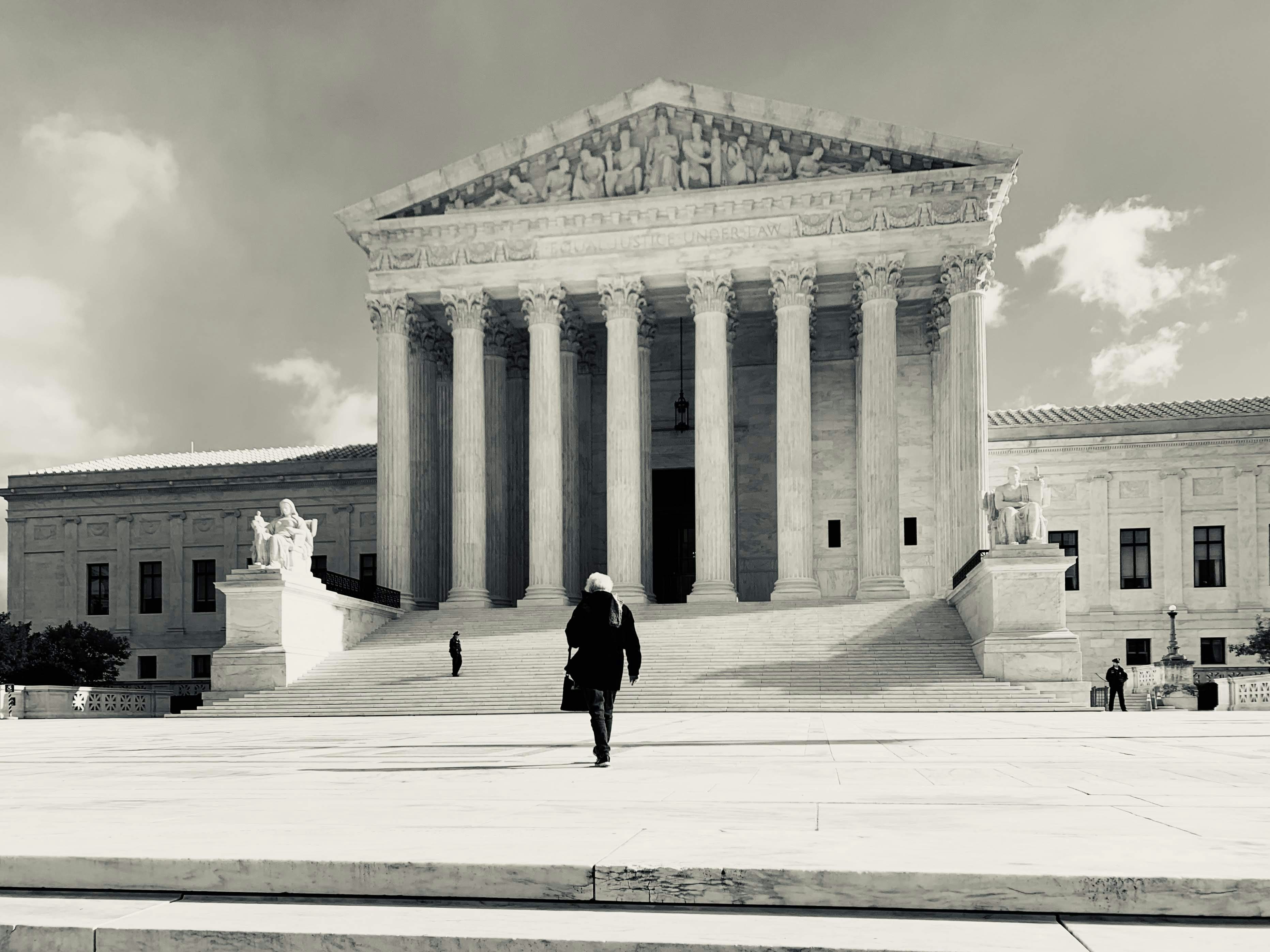
Loper Bright and the End of Chevron: Courts Reclaim the Interpretive Field
The Supreme Court's overruling of Chevron deference realigns statutory interpretation authority with the judiciary, ending forty years of executive branch latitude.

Landmark rulings. Regulatory exposure. Courtroom strategy. Dissected with the deliberate weight of a closing argument.
Every term, federal and state courts issue thousands of opinions. Most receive a paragraph in a trade publication, stripped of context, doctrine, and implication. The holding gets reported. The reasoning — the part that actually matters for your next filing — disappears into the slip opinion, unread.
Briefs is a legal review for practitioners who need to understand not just what was decided, but why, and what it signals about where doctrine is heading. We cover constitutional structure, administrative law, securities regulation, antitrust, and criminal procedure — the areas where the stakes of misreading a ruling are measured in client outcomes, not exam grades.
Our analysis is written for the associate pulling precedent at midnight, the general counsel stress-testing a board presentation, and the student who wants to understand how doctrine actually moves — not how it's described in a casebook three editions behind.
"Precedent is a living argument. Ignore it and it argues against you."
The Supreme Court's overruling of Chevron deference realigns statutory interpretation authority with the judiciary, ending forty years of executive branch latitude.
Following the Eighth Circuit stay, the mandatory Scope 1 and 2 emissions disclosures remain in legal limbo — here is what counsel should prepare for regardless.

The DOJ's complaint reconfigures monopolization doctrine around platform self-preferencing — a theory that, if sustained, would reach far beyond mobile operating systems.
Landmark rulings, regulatory shifts, and strategy — delivered every Friday with the rigor of a closing argument.
With Chevron gone, the major questions doctrine may become the primary brake on agency rulemaking — and its contours remain dangerously undefined.
The Court's narrow construction of 8 U.S.C. § 1324(a)(1)(A)(iv) preserves the statute but leaves First Amendment exposure unresolved for a broad class of advocacy.

The Delaware Court of Chancery's $55.8B voiding of Musk's Tesla package crystallizes the entire-fairness standard's application to controlling-stockholder pay.
Landmark rulings, regulatory shifts, and strategy — delivered every Friday with the rigor of a closing argument.
Section 1033 implementation will force banks to expose consumer financial data to authorized third parties — the litigation risk lives in the authorization framework.
The Court's remand leaves the core constitutional question — whether platforms exercise editorial judgment — for the Fifth Circuit to answer on a developed record.
"Precedent is a living argument. Ignore it and it argues against you."
Briefs
The plurality's "continuous surface connection" test dramatically contracts federal Clean Water Act jurisdiction, leaving states to fill the regulatory void.
Landmark rulings, regulatory shifts, and strategy — delivered every Friday with the rigor of a closing argument.
A unanimous Court rejected the lenient injunction standard applied in the Sixth Circuit, restoring traditional preliminary injunction analysis to unfair labor practice proceedings.
The FTC's theory that aggregated location data creates cognizable consumer harm — even absent breach — may become the template for privacy enforcement in the post-Dobbs era.

The Court's narrow holding upholding the MRT leaves the constitutional status of a wealth tax formally unresolved — and every tax practitioner should understand why.
Landmark rulings, regulatory shifts, and strategy — delivered every Friday with the rigor of a closing argument.
The Weekly Brief distills the week's significant rulings, regulatory actions, and doctrinal developments into a single, practitioner-grade analysis — written for the associate, the GC, and the student who needs to understand how the law actually moves.